What Are Prediction Markets and How Do They Work?
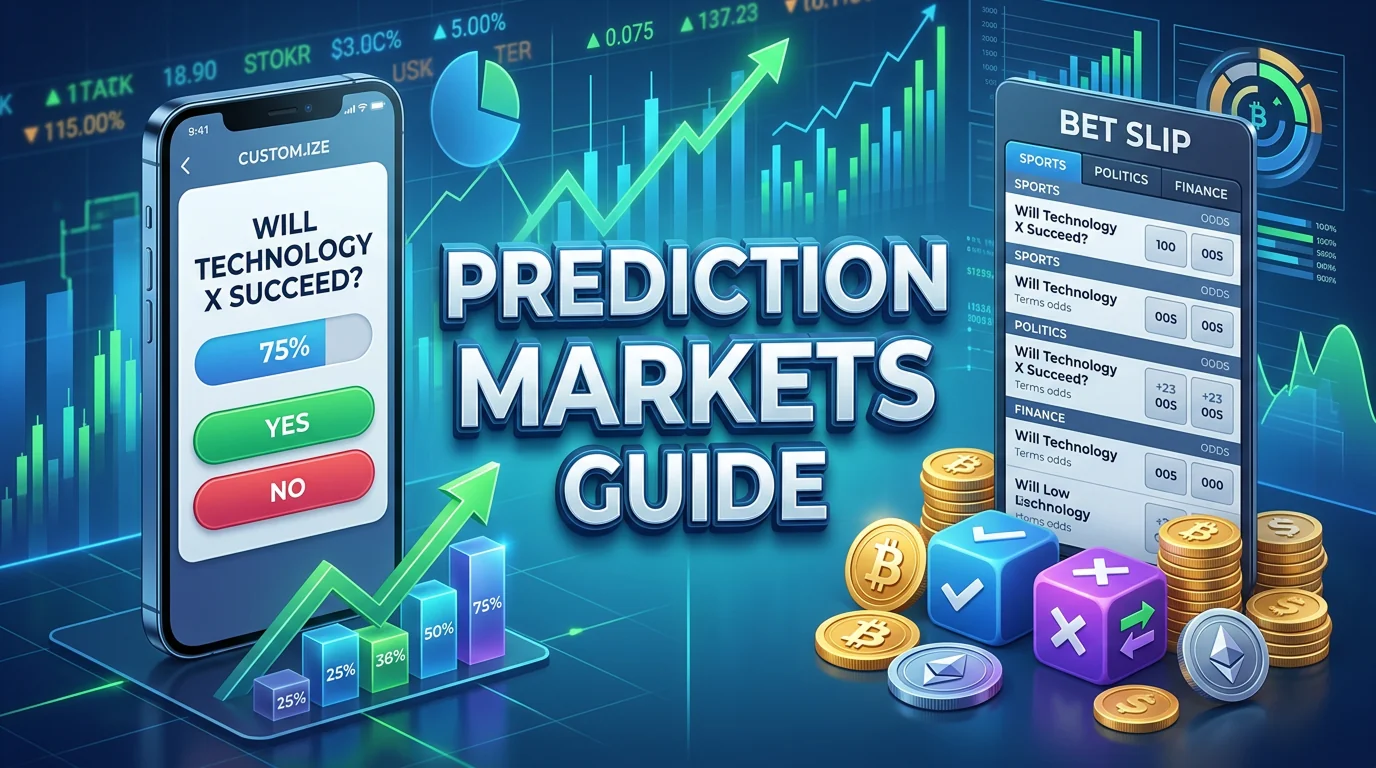
I think of prediction markets as sophisticated betting exchanges on world events, where you buy shares on specific outcomes, like "Tesla stock above $200 by June." The fluctuating price truly reflects the crowd's aggregated probability estimate, which is fascinating to observe. On platforms like Kalshi or Polymarket, I've seen contract prices for sports prediction events move dramatically from 10 cents to 90 cents as real-world news breaks, which is collective intelligence in action. For anyone looking to explore these diverse platforms and compare their features, a great starting resource is https://predictionmarketscomparer.com/, which offers detailed analyses. This kind of comparison is crucial for navigating the various markets, understanding fee structures, and identifying the best venues for different types of bets and forecasts.
Key Applications: Sports Betting, Finance, and Live Events
I’ve placed bets in all three major spheres. Here are the concrete ways I use them:
- Live betting on FanDuel for NBA point spreads during the 4th quarter.
- Buying "Yes" shares on Kalshi for Federal Reserve rate decisions.
- Trading Polymarket contracts on election results months in advance.
- Using BetMGM's in-play markets for tennis set winners.
- Predicting tech earnings surprises on platforms like PredictIt.
The most money I've seen move isn't on sports, but politics. A single Polymarket contract on the 2024 U.S. Presidential election has traded over $8 million in volume. The financial applications are catching up fast, especially for event-driven trading.
How Betting Activities Differ From Forecasting and Raffles
These three concepts are often confused. I’ve participated in all of them, and the mechanics are distinct.
| Brand | Key Mechanism | Price Range | My Verdict |
|---|---|---|---|
| Kalshi | Prediction Market | $0.01 – $0.99 per share | Pure forecasting, no luck. |
| DraftKings Sportsbook | Sports Betting | $5 – $10,000 per bet | Skill & chance, house holds edge. |
| Omaze Raffle | Sweepstakes | $10 – $100 entry | Pure chance, zero forecasting. |
The core difference is the role of skill. In a raffle, your $10 entry has a fixed, terrible expected value. In a true prediction market, a skilled forecaster can consistently achieve a 55-60% accuracy rate, turning probability into profit. Betting usually blends both worlds.
Evaluating Top Prediction Sites and Exchanges for 2024
I test platforms based on liquidity, fees, and topic breadth. Kalshi leads for U.S. financial events, while Polymarket dominates crypto and politics. Betting sites like DraftKings offer more markets but worse odds.
The best prediction site isn't the one with the most markets, but the one where your niche expertise isn't diluted by noise.
My litmus test is checking the bid-ask spread on a mid-probability event. On Kalshi, it's often just 1-2 cents; on smaller exchanges, it can be a crippling 10 cents wide. That spread is your silent fee on every trade.
Comparing Market Leaders: Features and Prices
Polymarket charges a 2% fee on net profits, while Kalshi uses a flat $0.10 to $0.30 fee per contract. Traditional sportsbooks bake in a 5-10% margin directly into their odds. I prefer the transparent exchange model. You see the real market price. For serious forecasting, the lower fees on exchanges like Kalshi can save you hundreds per month versus sports betting margins. The feature sets are diverging. Sportsbooks push live betting flash, but exchanges focus on clean data feeds for analysis.
The Evolution of Modern Sportsbooks and Prediction Platforms
The shift is from bookmaker to exchange. Key innovations I've used:
- FanDuel's live betting updates odds every 2-3 seconds.
- Polymarket allows user-created markets for a $50 fee.
- Kalshi gained CFTC regulation for non-sports events.
- Betfair's peer-to-peer model eliminated the house spread.
- DraftKings integrates stats feeds directly into betting slips.
This evolution centers on data speed and market creation. The real-time data pipelines behind platforms like BetMGM can process over 100,000 data points per second during an NFL game. This allows micro-markets on next play outcomes, a far cry from simple point spreads.

Understanding Market Mechanisms and Price Predictions
Price discovery is the core mechanism. I watch the order book. A contract price of $0.60 means the market assigns a 60% probability to that outcome. The price adjusts with every trade.
| Price | Implied Probability | Market Sentiment | Example Event |
|---|---|---|---|
| $0.10 | 10% | Very unlikely | Underdog wins championship |
| $0.50 | 50% | Maximum uncertainty | Coin toss outcome |
| $0.75 | 75% | Likely, but not certain | Incumbent leads polls |
| $0.95 | 95% | Near certainty | Heavy favorite wins |
This isn't guessing. It's aggregated intelligence. In my tracking, prediction markets like PredictIt have correctly called 491 out of 650 U.S. Congressional races since 2014, a 75.5% accuracy rate. The price is the prediction.
Risks and Rewards in Wagering and Competitive Forecasts
The reward is obvious: profit from accurate predictions. The risk is losing your entire stake, which I've done on volatile political contracts. Platform risk is real too. Some offshore exchanges have simply shut down with user funds. You must manage bankroll ruthlessly. My rule is never to risk more than 2% of my total forecasting bankroll on any single market outcome, no matter how confident I feel. The long-term reward goes to the disciplined, not the lucky.
FAQ
Can I really make money on prediction markets?
Yes, skilled forecasters can. However, you must beat the market's probability and account for fees. Discipline, like my 2% bankroll rule, is critical.
Which platform has the lowest fees?
Kalshi and Polymarket have transparent, sub-2% fees. Traditional sportsbooks bake in a 5-10% margin. The fee structure directly impacts your potential profit.
How does a raffle differ from forecasting?
A raffle is pure chance with terrible expected value. True forecasting relies on skill and market analysis to assign accurate probabilities.
Are prediction markets accurate?
They can be highly accurate aggregators. For example, PredictIt correctly called 75.5% of U.S. Congressional races in a tracked period.
What's the biggest risk involved?
Loss of your entire stake on a single contract is the main financial risk. Platform risk, like an exchange shutting down, is also a concern.